
Twin Talks: Insights & Innovations in Digital Twin Technology
Physical AI Governance: How to Design and Run It at a Production Site
Physical AI needs governance before it needs more AI. A practical framework for designing governance circuits and running them at production site speed. The industry has no shared framework for governing physical AI at a production site. The WEF wrote the theory. The vendors skip the topic. Here's the methodology and the system to close the gap.
Physical AI Needs a System Connector & Regulator, Not Just a Body & a Model
NVIDIA GTC 2026 declared physical AI the next industrial platform. But nearly all the energy is directed at individual machines — robots, autonomous vehicles, warehouse AMRs. The hard problem isn't the robot. It's governing how sensors, AI agents, autonomous machines, and human operators work together across an entire production site. This post unpacks why site-level orchestration — not better components — is the missing layer, and how the Sense → Decide → Act → Learn operating loop maps directly to what NVIDIA calls physical AI.

We're Building a Digital Twin Partner Network - And We Want Scanning Companies In It
Turn your clients' digital twin inquiries into high-value revenue. Geminum provides a seamless referral partnership for scanning, LiDAR, and 3D modeling firms. When your clients ask for digital twins, you don't have to turn them away or risk a failed delivery. Refer them to our specialized team, and we handle the design, advisory, and delivery—while you earn a 10% commission on the contract value (typically USD $50,000–$75,000 per project). Our partners retain their client relationships and secure increased, long-term repeat scan work. We are currently building partner networks across Australia, New Zealand, Canada, Saudi Arabia, and the UAE.
Put asset health in context to effectively adopt predictive maintenance
Read time: 5min
Learn how the Geminum Site Twin connects asset health, digital twins and predictive maintenance models to cut downtime, manage risk and unlock throughput gains.

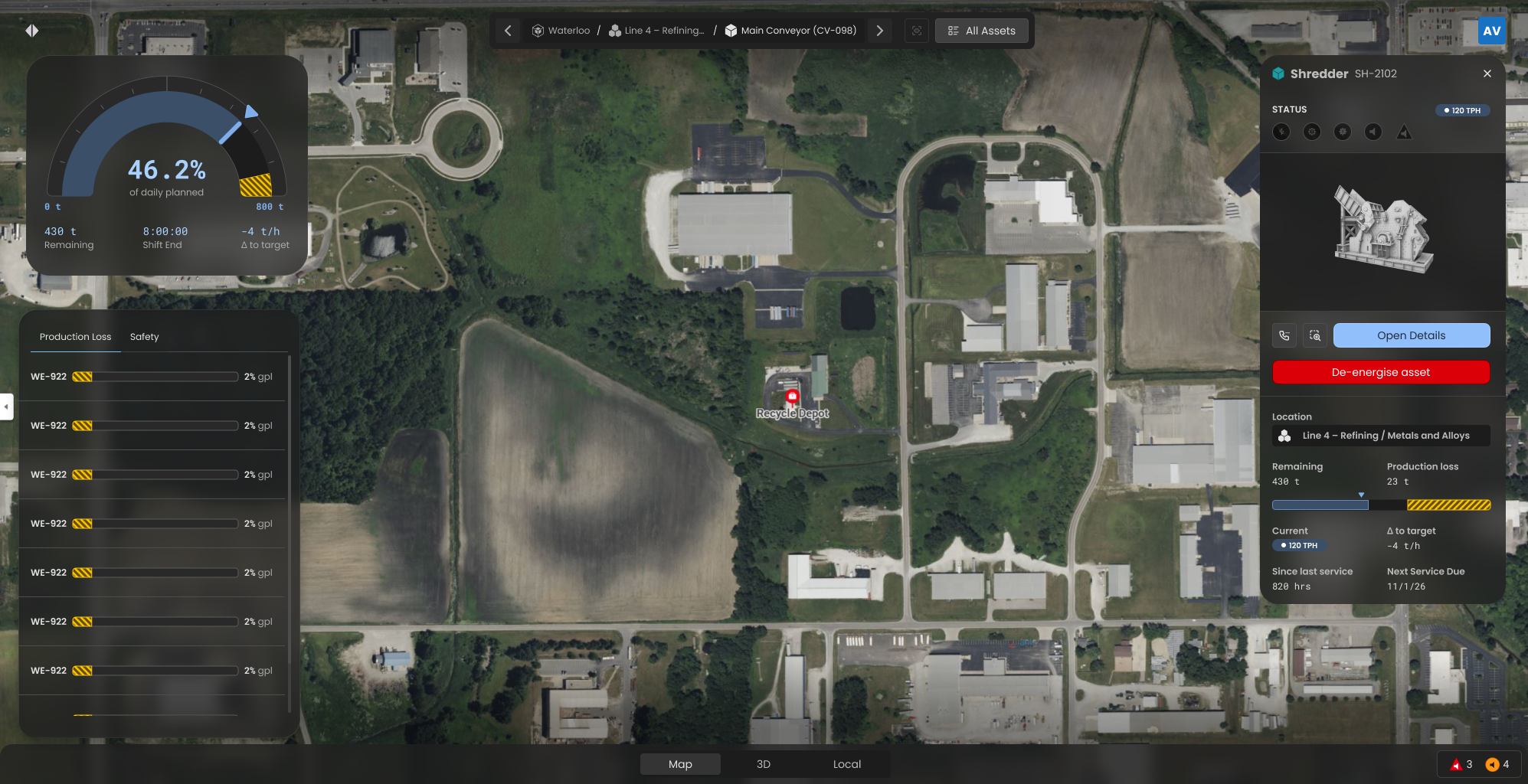
Recycle Digital Twin: a practical way to manage operations, lift throughput, and improve safety
Read time: 5min
A Recycle Digital Twin is a dynamic, contextual model that integrates production, maintenance, and safety data for recycling operations, providing a single, clear picture of the entire system from suppliers to finished products. By breaking down organizational silos, it enables frontline leaders to identify operational constraints, prioritize impactful changes, and coordinate actions across portfolio, value chain, asset, safety, and 3D visual perspectives. The twin supports real-time insights, near miss capture, and collaborative workflows that unify teams and drive prompt, informed decision-making, leading to increased throughput, reduced downtime, and improved safety outcomes.

Designing Digital Twins: A Problem-first Approach to Bridging the Real and Virtual Worlds
Read time: ~3min
“Designing Digital Twins” - the new release on Amazon from Geminum co-founder Rob Foster, is a compilation of many years of designing, building and iterating digital twins across asset owners, service providers and technology teams.

Plant Twin: From legacy equipment to a Connected Digital Ecosystem
Read time: 5min
Traditional approaches to system automation and enterprise digital transformation often fail to deliver lasting value, especially at the plant and product level. Plant Twin’s connected ecosystem approach modernizes individual systems, integrates environmental monitoring, and digitizes workflows - enabling manufacturers to make the journey from simple automation to true operational autonomy at their own speed, and without huge investments into shiny technology that doesn’t improve overall system throughput

Enhancing Industrial Safety with Digital Twins
Read time: ~5mins
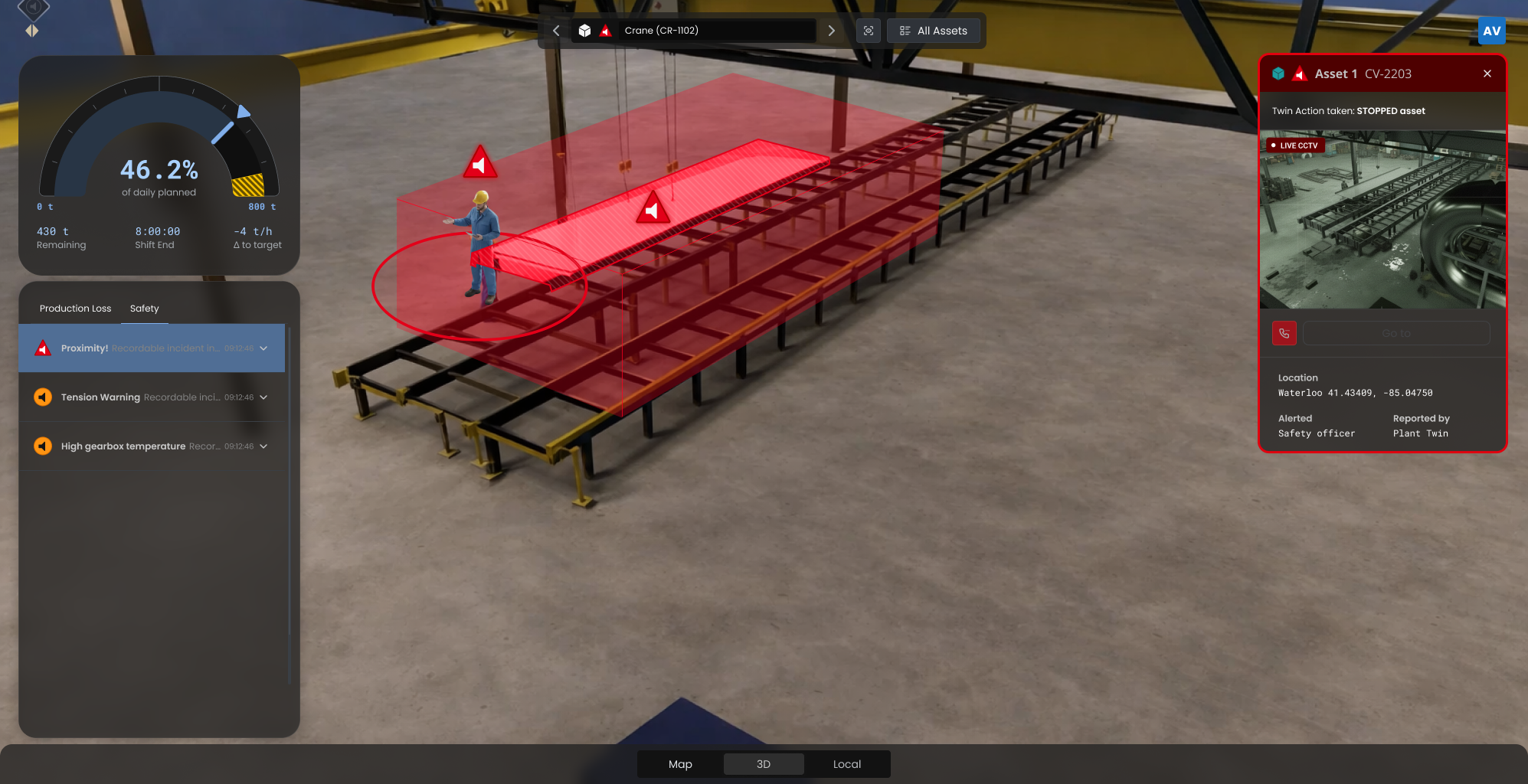
In today's rapidly evolving industrial landscape, safety remains a paramount concern for organizations across various sectors. As technology continues to advance, innovative solutions like digital twins are emerging as powerful tools to enhance workplace safety and mitigate risks. This article explores the intersection of industrial safety and digital twin technology, highlighting how this cutting-edge approach can revolutionize safety practices and create safer work environments.

Digital twins + Theory of Constraints: Optimising Value Chain Management
Read time: ~5mins
The Theory of Constraints (TOC) offers a powerful framework to identify and manage constraints that hinder a system’s ability to achieve higher throughput. Coupling TOC with digital twins - virtual replicas of physical systems and processes - enables continuous monitoring and improvement of operations.

Grid Twin: Enhancing Power Company Operations with Real-Time Data
Read time: ~8min
The Grid Twin provides power companies with cross-domain data and near real-time context to improve Engineering & Project delivery, Maintenance & Training, and Operations & Planning. This flexible tool integrates key data sets, including 3D models, spatial data, and maintenance schedules, to support various use cases across the organisation, driving efficiency and informed decision-making.

The Journey to Autonomy - Part 2 - From Experience to Prescriptions
Read time: ~15min
Industrial autonomy is a complex journey, not a guaranteed outcome. While prediction accuracy is crucial, many operations won't reach full autonomy before their end of life. These sites must adapt to meet ESG, safety, and compliance demands while maintaining operational performance. The workforce, shaped by current environments, needs support to navigate this transformation, as they will make critical decisions that impact both the operation's future and worker safety.

Geminum Now Offers Digital Twin Training Courses
Read time: ~3 mins
Geminum offers corporate training on designing, delivering, and supporting digital twins throughout the asset lifecycle. Courses are available in person or remotely, ranging from one to three days, covering key themes like solution design, user discovery, and facilitated workshops.