
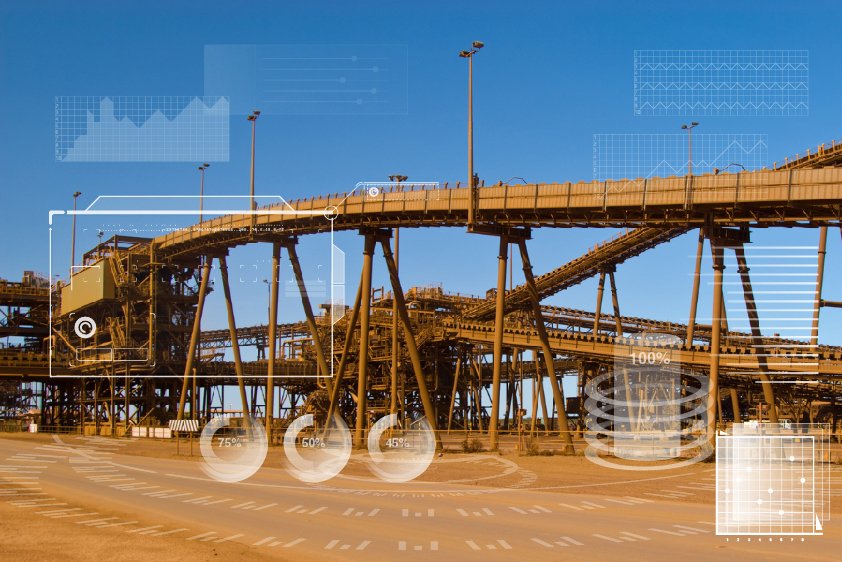
Site Twin
A digital twin platform that unifies and enhances Production, Safety and Maintenance, configured to maximise the value of existing systems and data.
A Site Twin requires no rip and replace. It sits over your existing systems, gives teams access to the right data in context (via browser and mobile), and links users back to the approved controls & systems of record to take action.
As AI agents, machine vision, and robotic systems enter industrial sites, they need an operating system - a way to sense changes, decide what matters, act within governance, and learn from outcomes. That's what the Site Twin is."
Core Features
Explore 3D
Shared operational picture
Near real time 3D visualisation and playback of site operations, plans, movements and events so teams share the same context. Built on the Nvidia Omniverse & Isaac Sim ecosystem.

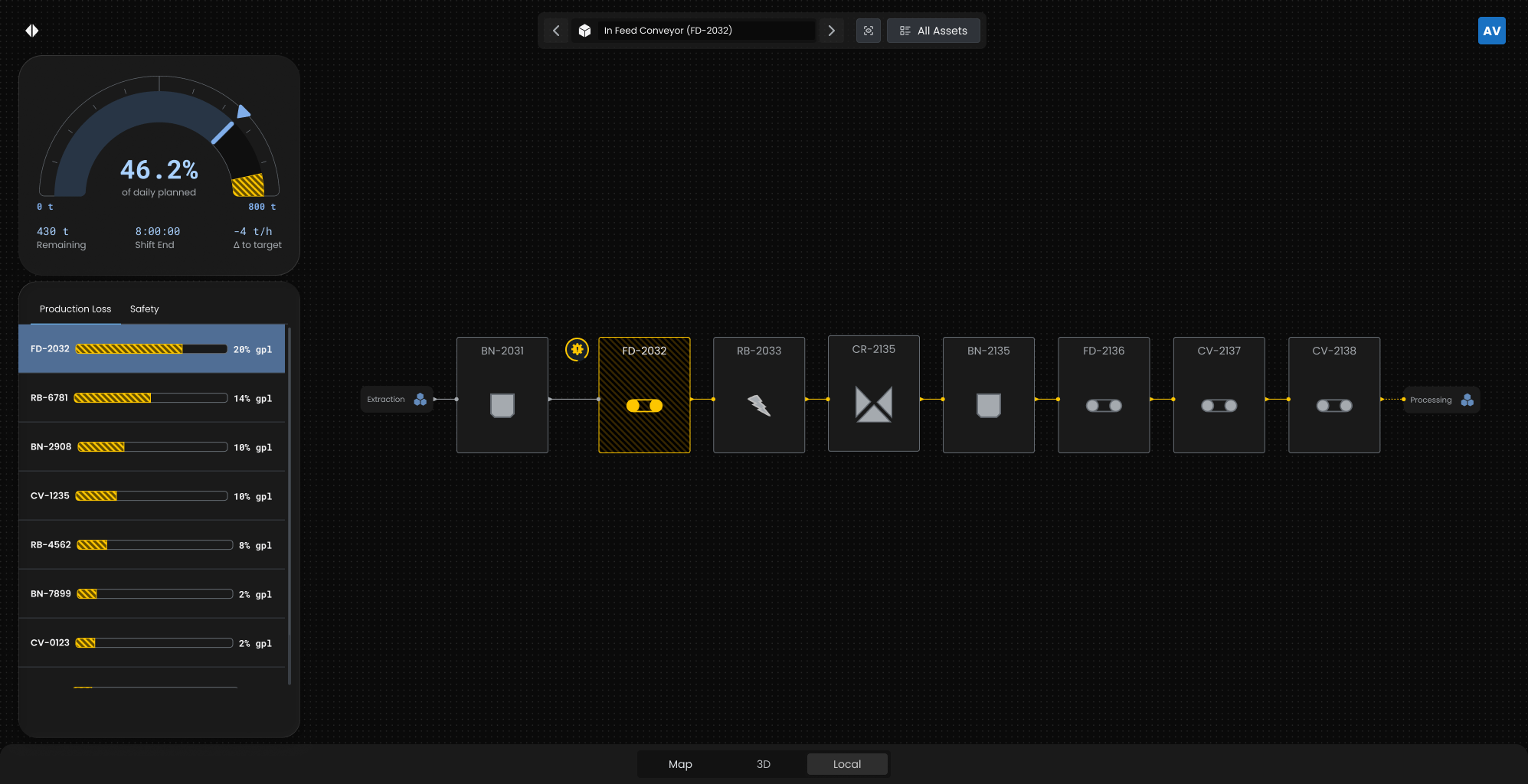
Value Chain
Dynamic constraint model
Models the value chain and shows local vs global constraints, deltas to plan/capacity, and where losses are occurring.
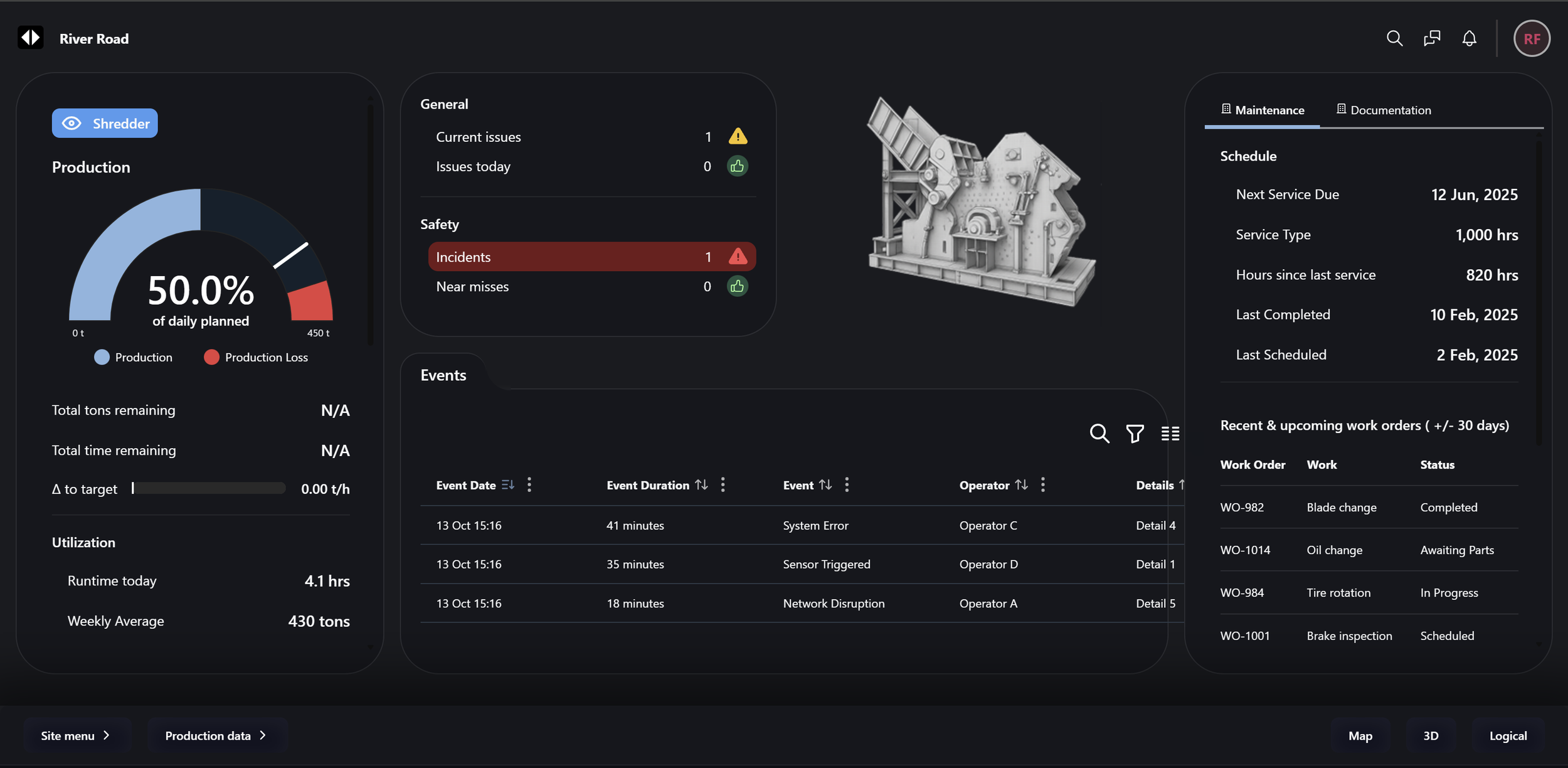
Assets & Work
Find what matters, fast
Unifies asset history, documents and work orders so maintainers and supervisors stop wasting time searching and can intervene faster.
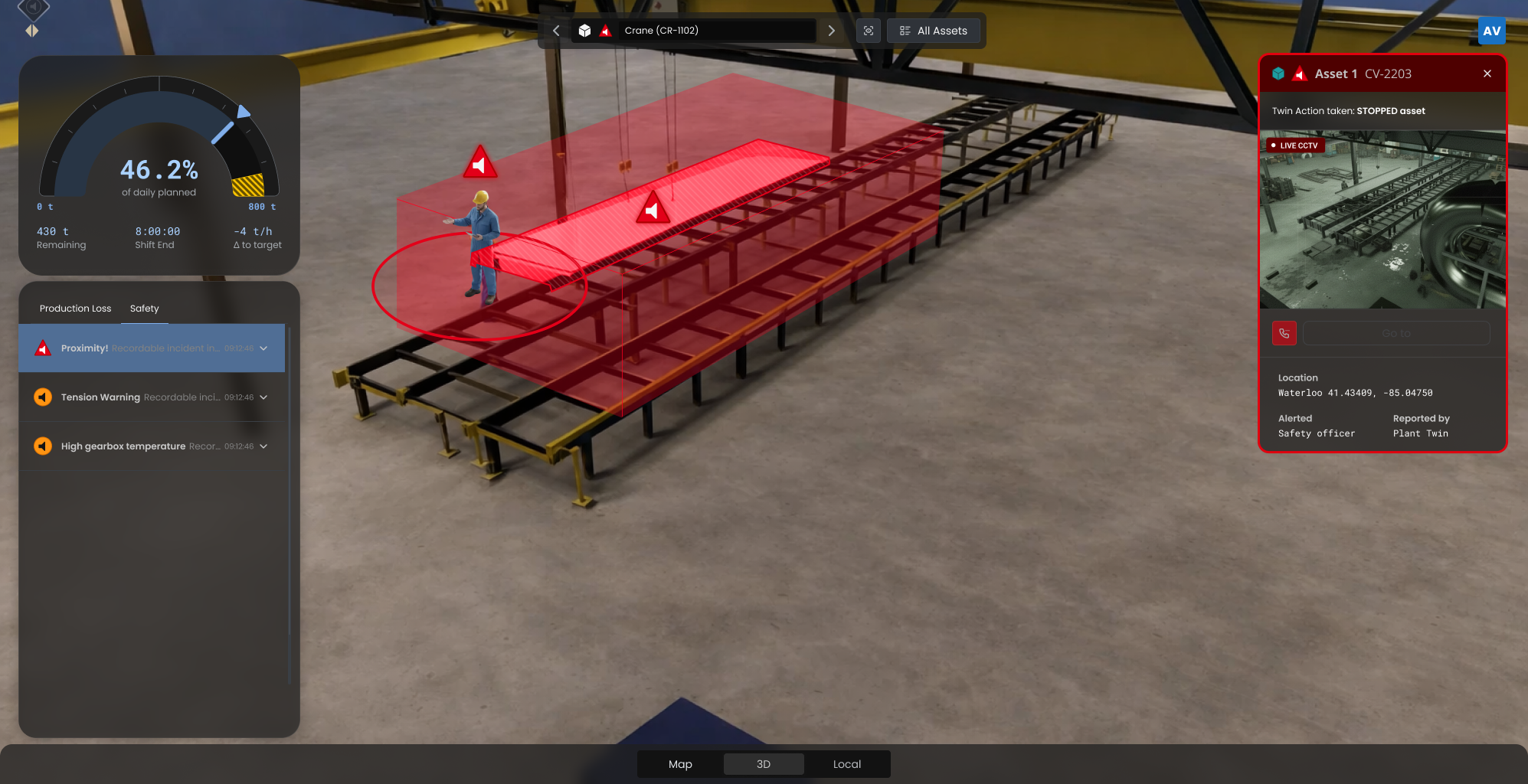
Safety
Monitor & escalate
Persistent monitoring via cameras, LiDAR and AI, with escalation rules that surface risks, near misses and compliance issues without creating workflow noise.
Portfolio
Look across sites
Roll up performance and issues across sites, benchmark asset classes across sites, drill down, and spread what works.
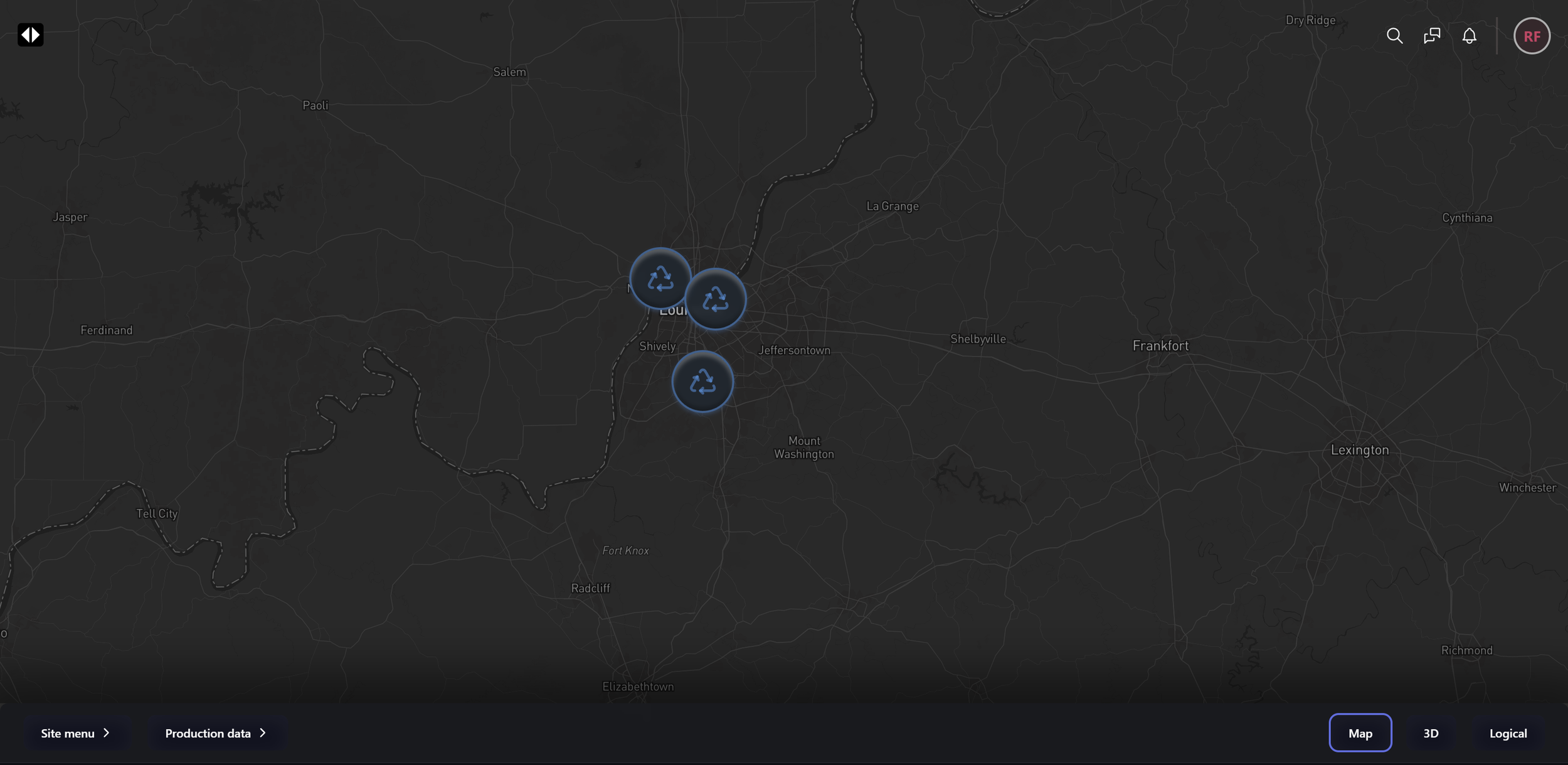
Events & Relationships
Global event tracking & graphs
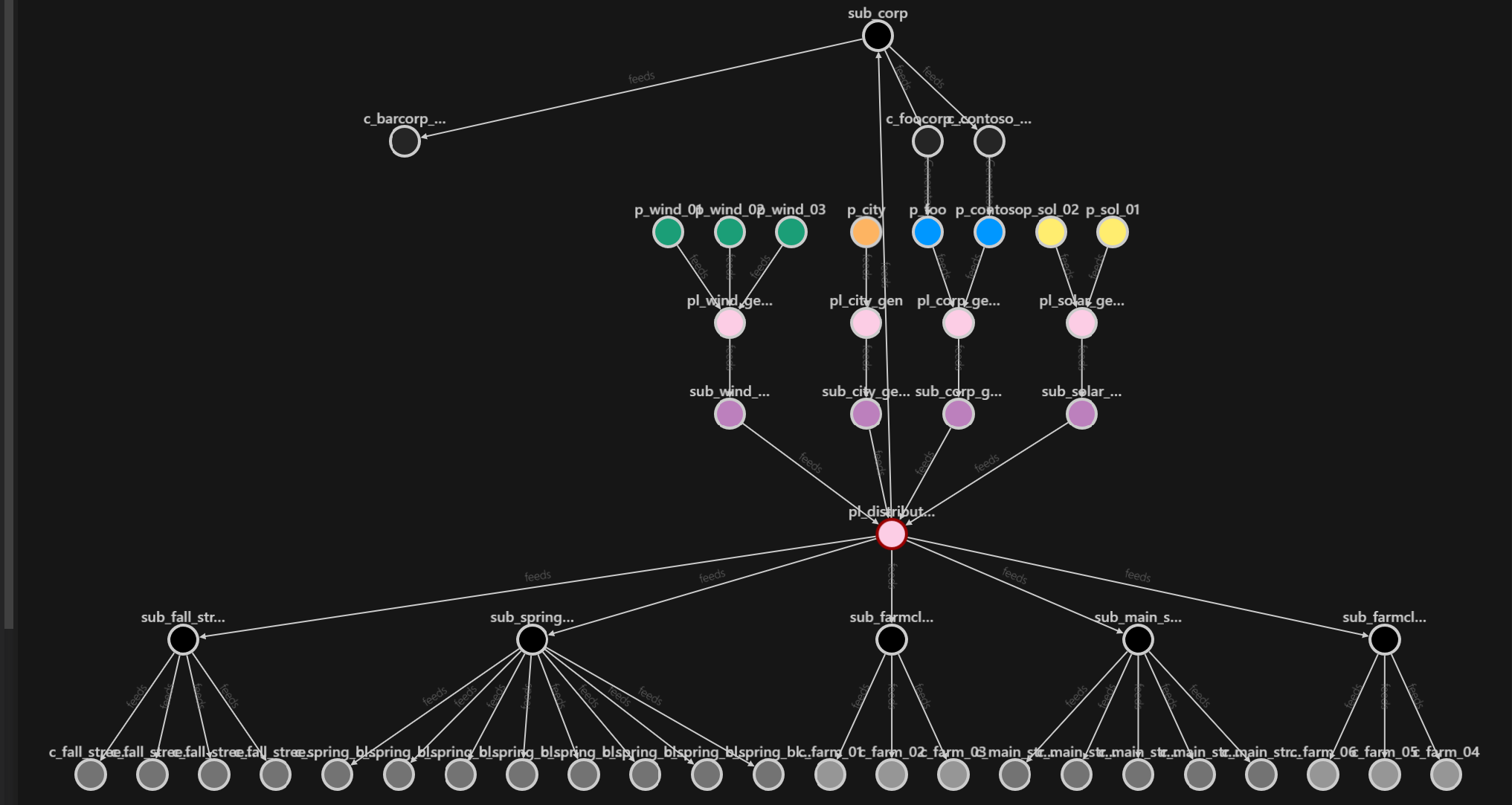
Create and track the state of events across your site, from every connected system and internal models (e.g. constraints and safety events). Relationships between Events and Assets enable contextual search and intelligent AI foundations.
How do you use it?
Production &
Operations
Daily
See live and predicted constraints
See live ETAs and updates on supplier deliveries and product pickups
Collaborate with Safety in real time to mitigate or escalate issues
Raise or approve/decline automated production plan changes through connected systems or via Teams/WhatsApp
Collaborate with Maintenance in real time to solve live faults or re-schedule work
Weekly / Monthly / Quarterly
Review production vs plan and production vs capacity performance
Playback constraints, faults and events in 3D and timeline to assess where performance was lost
Export all data to 3rd party systems for analysis and planning
Safety
Daily
See live and predicted Safety near misses and incidents
Playback safety near misses and incidents
Collaborate with Production & Maintenance in real time to mitigate or escalate issues
Raise or approve/decline automated Safety reports through connected systems or via Teams/WhatsApp
Weekly / Monthly /Quarterly
Review safety near misses and incidents vs fault, constraint and work history
Export 3D playbacks of Events
Export all data to 3rd party systems for investigation and reporting
Maintenance & Engineering
Daily
See where faults and constraints are and have overlapped
Quickly find documents, asset and operational data, including faults, constraints and work history
Raise or approve/decline automated work orders (new or changes to existing) through connected EAM/CMMS
Collaborate with Production in real time to solve live issues
Weekly / Monthly / Quarterly
Review fault, constraint and asset history to assign Improvement projects or alter Scheduled Work
Export all data to 3rd party systems for detailed analysis and root cause
Cross-functional
End of Shift / Pre-start Review
Production, Safety & Maintenance Events & Constraints with 3D playbacks
Shared Live 3D Situation Awareness
Everyone can see the same Events & Constraints across Site and along the Value Chain
Collaboration & Reporting
Microsoft Teams chats on any Event or Constraint, with live 3D views and operational overlays.
How it works
From (Connected) Data to (Informed) Decisions to (Rapid) Action
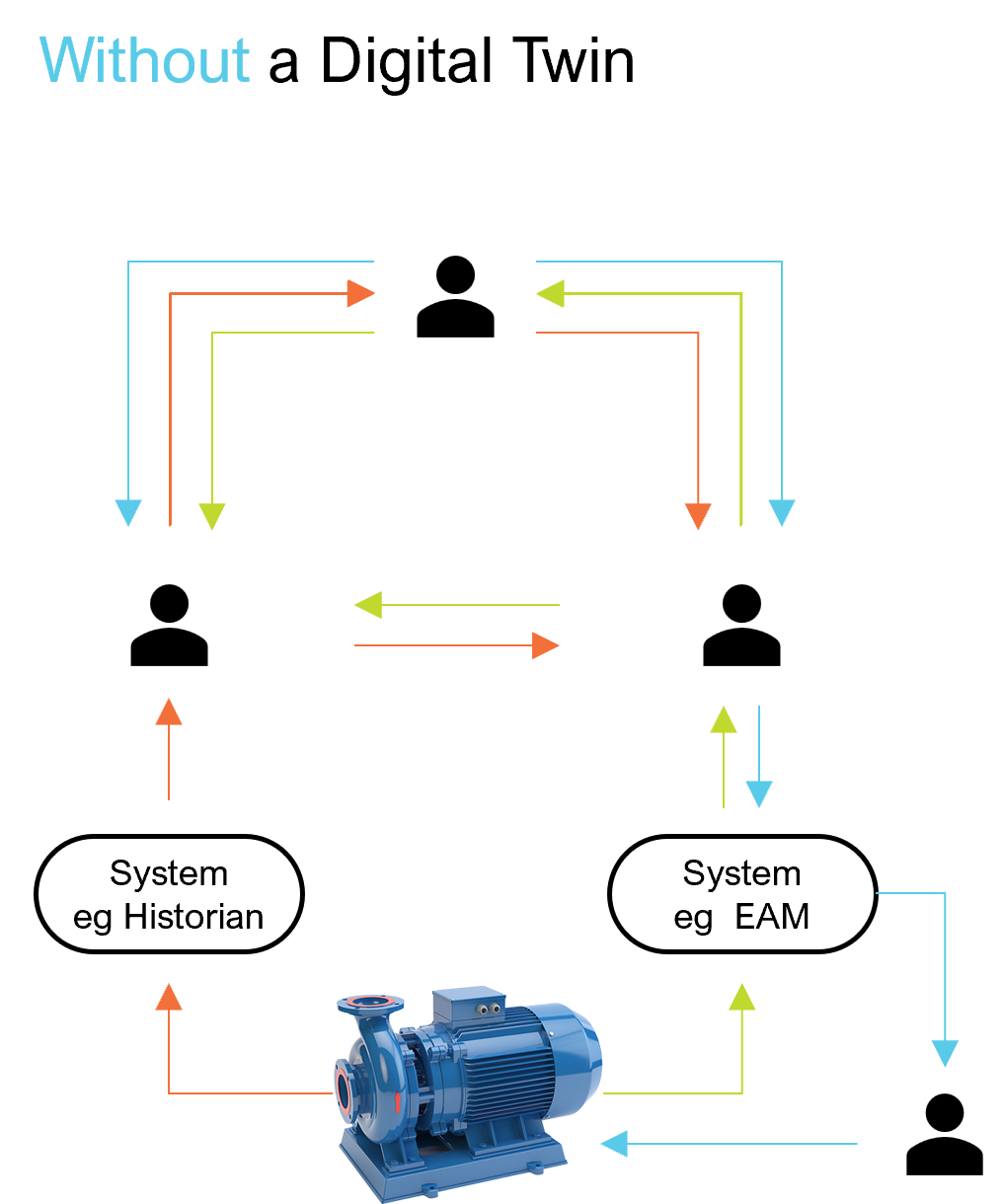
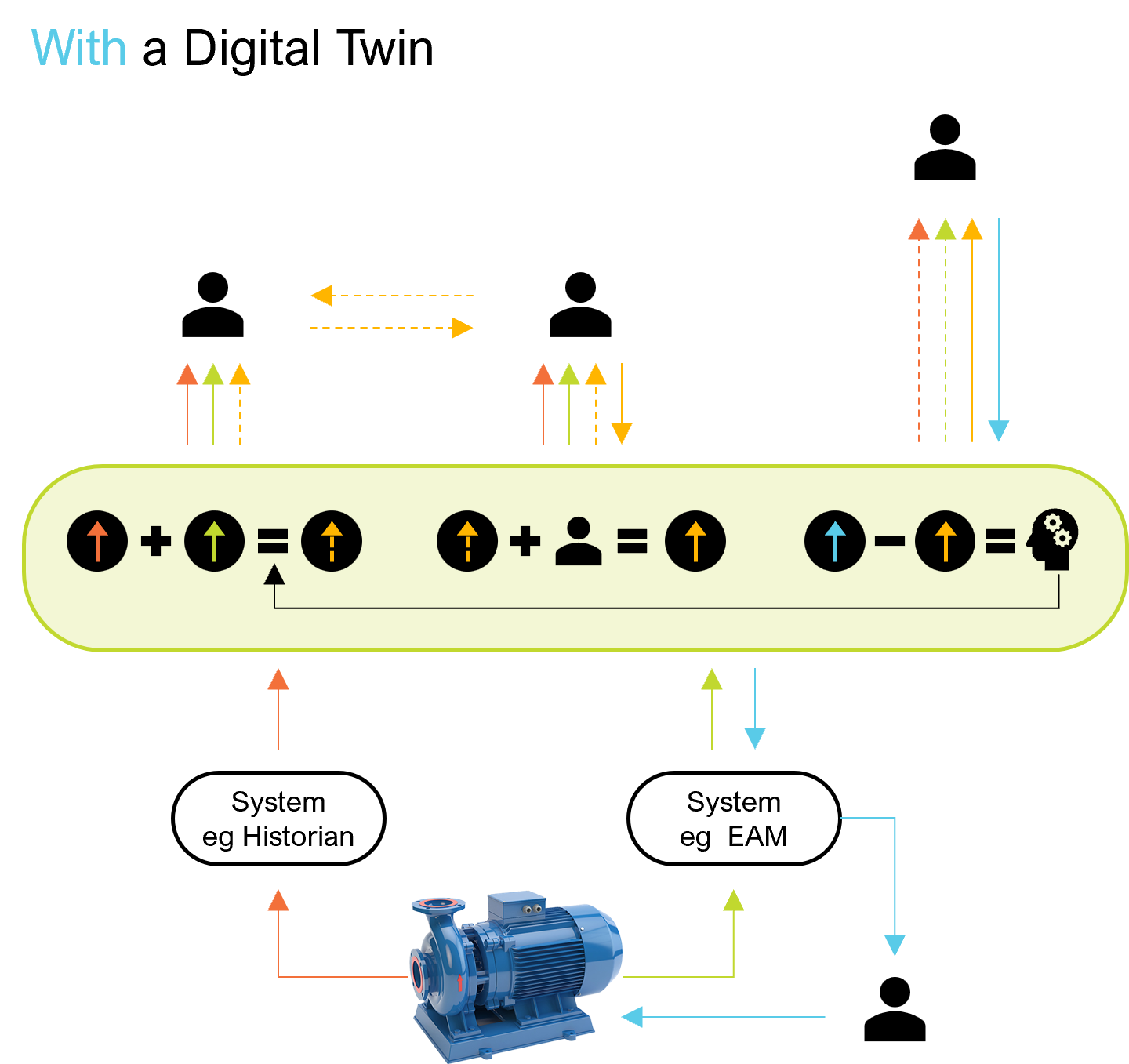
The Site Twin sits over connected systems and contains site specific data models
Connect OT/IOT and enterprise systems (SCADA/OT historian, EAM/CMMS, ERP/MES, GIS, fleet, safety systems, planning tools)
Transform and juxtapose data from connected silos to create high context for humans (3D & Geospatial with overlays) and AI (event graphs)
Push and record actions back into connected systems (work orders, setpoints, escalations, planning updates) and direct to other Deciders/Actors (humans & agents)
The Site Twin connects and governs AI vision systems, IoT sensors, SCADA/OT data, fleet systems, predictive models, and emerging autonomous agents - all within a single operating loop
Architecture & Scope
The Site Twin uses cloud and, where required, additional on-prem components (cameras, compute, storage) to support near real time decision support and action.
For sub-second safety interventions, on-prem compute and storage are required to avoid cloud latency and connectivity risk.
The Site Twin is available to unlimited users through any compatible browser. Mobile applications are commonly bundled.
How do we Deliver?
Site Twins are delivered as a combined Services & Product offering
Diagnosis, Discovery, Delivery (inc Constraint Models), and Business Process Engineering are all delivered as Services.
Some Sites need a little, some need a lot.
Additional data (such as LIDAR/site scanning), Integrations and Procurement /Installation /Commissioning of hardware are all Managed Services (we mange the work, we don’t self-preform).
Some Sites perform this all themselves, some outsource all of it.
The Site Twin platform is our Product. It’s a SaaS service, priced based on value and risk.
-
Assess Site processes, systems, data locations, constraints and objectives.
Deliver the Digital Twin Maturity & Readiness Assessment and clear next steps.
Typical duration 2–5 weeks.
-
Connect key systems for a single operational view. Start with constraint identification so teams align on where losses are occurring. Establish the event stream and embed Collaboration into daily/short-interval workflows.
Typical duration 12-16 weeks
-
Add causality and prediction to constraints, predictive maintenance, and persistent safety monitoring and escalation.
Where needed, co-specify extra comms/compute to support rapid interventions.
Typical duration 12-16 wks
-
Roll out complete Site Twin to other sites with lower cost and time using shared platform elements and learnings from Site 1.
Typical timing: 6 mths after rollout (i.e. measurable ROI)
-
Stage 5 is where sites begin operating with bounded AI autonomy - agents acting within governance, humans focusing on exceptions and judgment.
Typical timing: Driven by outcomes
Why Choose Geminum?
We are operations, safety, maintenance and data experts who have chosen to specialise in digital twins for production intensive companies.
We are the team that develops, delivers & validates improved production, safety and maintenance outcomes you need to create truly integrated asset operations.
FAQ - Frequently Asked Questions
What is a Site Twin? A Site Twin is an operational digital twin that unifies production, safety, and maintenance data from your existing systems into a single browser-based view. It sits on top of your current infrastructure — SCADA, EAM, ERP, GIS, fleet management, and safety systems — giving every team contextual access to the information they need without replacing your systems of record.
How long does it take to deploy a Site Twin? Deployment follows three stages: a 2-5 week diagnosis phase to understand your systems and priorities, followed by a 12-16 week visibility stage that delivers the core operational twin, then a 12-16 week stage adding safety and maintenance capabilities. Most clients see measurable ROI within approximately 6 months of initial rollout.
Does a Site Twin replace our existing operational systems? No. The Site Twin is designed as an intelligence layer that connects to your existing systems — SCADA/OT historians, EAM/CMMS, ERP/MES, GIS, and safety platforms. It reads data from these systems and can push actions back into them (work orders, setpoints, escalations), but it doesn't replace any of them.
What industries use Site Twins? Site Twins are used by production-intensive organisations across mining, manufacturing, recycling, power generation, and other asset-heavy industries. Any operation that runs multiple systems across production, safety, and maintenance — and needs a unified view to coordinate decisions — is a fit for a Site Twin.
How does the Site Twin improve safety monitoring? The Site Twin integrates camera, LiDAR, and AI-based monitoring to persistently detect safety risks and near-misses — without flooding teams with excessive alerts. It uses configurable escalation rules so compliance issues are surfaced to the right people at the right time, and can trigger sub-second interventions through on-premises compute where safety-critical response times are needed.
What is the Value Chain feature in the Site Twin? Value Chain is a dynamic constraint modelling view that shows where production losses are occurring across your operation. It distinguishes between local bottlenecks and global constraints, highlights deviations from plan, and helps production teams identify the interventions that will have the greatest impact on throughput.